

Synchro Self Shifting Clutches
Our answer to your opportunities in the energy market.
Earn more money with a hybrid drive train.
RENK Synchro Self Shifting Clutches make drive trains hybrid and more profitable. A hybrid drive train lets the same plant serve peaking power, grid stabilisation, district heating, compression or waste heat recovery. The mode changes with the market, without stopping, without rebuilding. For example, a generator earns money in summer as a synchronous condenser on the grid while the turbines stand still.
Six current developments.
One answer.
Every mode below runs on a hybrid drive train, switched while running, without stopping, without rebuilding.
Grid services / power plant
More wind and solar capacity displace rotating mass from the grid, and frequency instability rises. Peaking gas turbines with synchronous condensing capability become indispensable grid stabilisers. The gas turbine delivers power to the grid within minutes when demand peaks, even from black start conditions. Between peaks, the same train serves instantaneous grid stabilisator to ride through lulls or disruptions. No control signal required.
Many national regulations already require synchronous condensing capability for new and existing plants. The turbine stands still while the generator stays on the grid as a rotating mass, stabilising frequency, compensating reactive power, and providing inertia. It stabilises the grid and earns money at the same time, without burning fuel and without new infrastructure.
A seasonal switch between power generation and heat extraction, without stopping the plant, is highly attractive for CHP operators. In summer the train runs for maximum power generation or synchronous condensing. In winter the high-pressure turbine generates power, while the low-pressure turbine disengages, and its steam feeds the district heating network. The mode changes while the train keeps running. Only revenue-generating machines keep running, while unused equipment stands still – reducing operating hours and extending service intervals.
Industry / storage / new markets
Hot process exhaust from steel making or chemical processes like ammonia production drive an expander or steam turbine. The clutch engages it to an existing compressor or generator train while running, within seconds, without interrupting the process. Waste heat becomes a second source of power to save electricity and increase plant efficiency.
Compressed-air and liquid-air energy storage plants need flexible trains with several engageable machines. Air is compressed for storage and expanded for power generation. The generator is used for synchronous condensing with a flywheel at all times, especially during compression. The clutch connects the machines automatically or on demand, so the same train can store, generate, and stabilise.
On-site power generation with built-in grid stabilisation clutches and torque limiter couplings Couplings Couplings are used to connect two shafts for the transmission of torque, and to compensate for misalignment or movement. enable synchronous condensing as an added local service. The generator supports the local grid while the same power train covers demand peaks and backup. RENK advanced computing capabilities allow transient train simulations to strengthen the resilience of your island power generation network.
The unique RENK advantage
One train, used many ways.
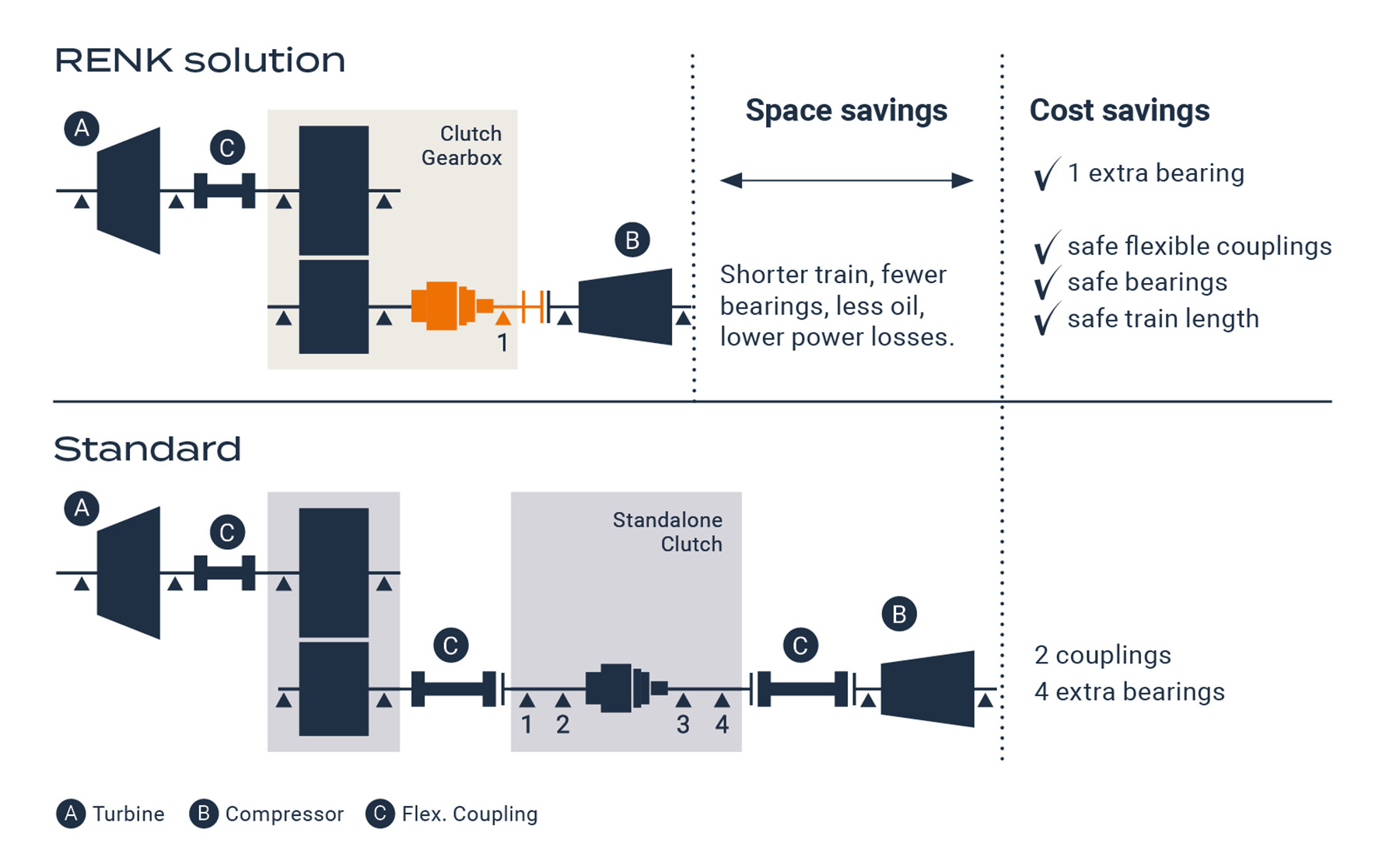
Hybrid drive trains open up multiple uses of the same machines, combining individual machines, parts of the train, or all of them in operation. The integrated flexible gear coupling shortens the train and reduces the number of bearings needed, which means less oil and lower power losses. When fully integrated into the gearbox, the clutch delivers the most compact and efficient train, allowing operators to meet today's flexibility demands, run their plants economically, and support a growing share of renewable energy generation with the reliable power and heat supply they expect.
Flexible drive trains.
More operating modes.
Higher returns.
- Automatic engagement and disengagement up to very high speeds
- Most compact and robust clutch coupling in the market
- Wear-free thanks to hydrodynamic lubrication, daily start-stop capability
- Proven design since 1960, suitable for new builds and retrofits
- Support and service throughout the entire life cycle, worldwide on-site
Our Synchro Shifting Clutches are proven in operation:
- More than 1,000 clutches in operation worldwide
- Test beds for full-speed testing at low load
Synchro Self Shifting Clutches are used in a wide range of applications
Power generation
- Peaking power plant
- Synchronous condensing
- Power discharge
- Combined Cycle Power Plants (CCPP)
- Combined Heat and Power (CHP) plants
- Compressed Air Energy Storage (CAES)
- Liquid Air Energy Storage (LAES)
Energy recovery, combined cycle technologies, cogeneration and others
- Dual drive compressors and blowers, i.e. combining expander, steam turbines and electric motor drive in petrochemical plants (nitric acid) and steel making (blast furnaces)
- Waste heat recovery in process applications (green ammonia)
- District heating extraction from a CHP power train
- Gas turbines starter drives (pony motor)
- Automatic turning gears
Marine hybrid propulsion
- Combined propulsion systems such as CODELAG, COGAG COGAG Combined Gas and Gas is a marine propulsion system where two or more gas turbines drive the same shaft. Individually or together. , CODAD CODAD Combined Diesel and Diesel - is a marine propulsion concept in which two or more diesel engines are combined to drive a single shaft or propeller system. , etc.
Always available. Worldwide.
RENK supports synchro-self-shifting clutches throughout their entire life cycle. From consultation and engineering, through commissioning, condition monitoring, training and maintenance, operators benefit from a single source of expertise. Field service teams operate worldwide and carry out inspections, overhauls, and upgrades, many of them on site, reducing downtime and cost. Genuine parts and complete clutches are available for all MS, HS and ZD types.
Engage. Disengage. Automatic.
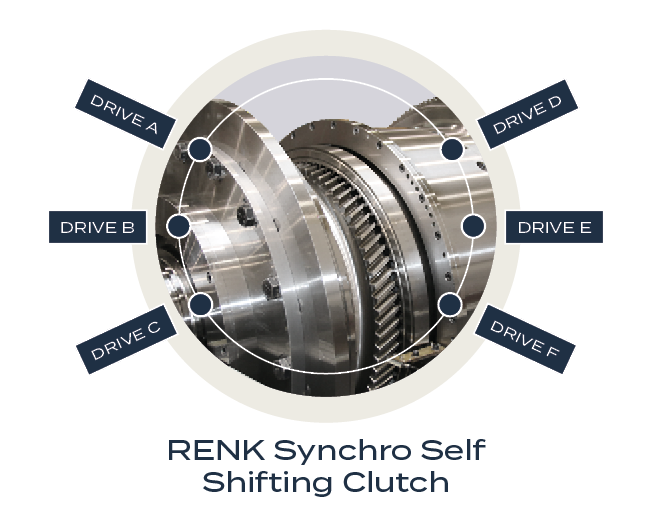
RENK Synchro Self Shifting Clutches combine three elements:
- a freewheel mechanism that detects synchronous speed
- a helical tooth system that steers and transmits torque
- a gear coupling that compensates for shaft deflection.
Power is transmitted only when speed conditions are right. Without effort. Without downtime.
The clutch engages automatically, without a control signal, without intervention. The freewheel detects synchronous speed, the same principle as a bicycle freewheel. As soon as the input catches up with the output, pawls engage and the clutch screws itself into engagement via the helical teeth, like a nut on a bolt, and transmits the positive torque (form fit). All parts are hydrodynamically lubricated and therefore wear-free. Axial, radial and angular shaft misalignment is compensated by the integrated gear coupling.
Disengagement is equally automatic: as soon as the input speed falls below the output speed, the helical load toothing reverses to the back flank and screws the clutch out, no signal required, no energy consumed. The MS clutch disengages automatically. The HS clutch, by contrast, stays engaged even when torque turns negative. It transmits full positive and negative torque like a classic gear coupling and disengages on command via the hydraulic unit at speeds below 10% load.
Technical data
- Torque range: 2 kNm – 4,000 kNm
- Speed range: up to 18,500 rpm
Three versions, one principle:
MS, HS and ZD
Mechanical self-shifting: Fully mechanical, engages at any speed within the permissible range. The simplest and most modular variant, suitable for the majority of applications.
The mechanical synchro-self-shifting clutch (MS Type) provides a form-fit connection between synchronously rotating system parts and separates automatically at non-synchronous speeds. It engages automatically at any speed within the permissible speed range – fully mechanical, no hydraulics, no control system. With the integrated flexible gear coupling, bearings and train length can be saved. The MS clutch is the most common and modular variant, suitable for the majority of applications.
Technical data
- Torque range: ≤ 1,000 kNm
- Speed range: ≤ 18,500 rpm
Additional features for MS type:
RENK Synchro Self Shifting Clutches are configurable for a wide range of operating requirements.
- Lock-in: prevents disengagement, enables gearboxes of negative torque
- Lock-out: prevents engagement via hand lever, centrifugal force or hydraulic remote control
- Overload protection: torque limitation and/or separation
- Internal thrust bearing: axial positioning of floating generators
- Electrical insulation
- Gearbox-integrated solutions
- Free-standing encased versions: up to four bearings and two shafts
- Brake: hand lever, pneumatic or hydraulic actuation
Further features available on request.
Hydraulically supported self-shifting: Transmits full positive and negative torque without disengaging. The preferred solution for very large machines and generator-started gas turbines.
The hydraulically supported self-shifting clutch (HS Type) has a similar but smaller synchronizing mechanism than the MS clutch but uses a spur gear power gearbox toothing instead of the helical load toothing. This allows the HS clutch to transmit full positive and negative torque without disengaging – it stays engaged like a classic gear coupling. Engagement takes place at speeds below 500 rpm; disengagement is carried out on command by the remote-controlled hydraulic unit at full speed below 10% load. The HS clutch is the preferred solution for very large machines and applications where the gas turbine is started via a generator-mounted start-up converter.
Technical data
- Torque range: ≤ 4,000 kNm
- Speed range: ≤ 3,600 rpm
Shifting gear coupling: Engage in standstill on demand. Disengage at full speed after reducing load. Full separation when disengaged, allows safe service work on the disconnected machine. This is not a self-shifting clutch. It is, however, the simplest version of a high-speed disconnectable clutch.
Engage and disengage on demand. Full separation when disengaged, allows safe service work on the disconnected machine. The ZD shiftable gear coupling is the simplest clutch version that allows engagement in standstill by hand-lever, hydraulics or pneumatics. Engaged the ZD operates like a classic gear coupling, i.e. transmits full positive and negative torque. Like the HS type, ZD can be disengaged on command at full speed after reducing the load. ZD type is used for applications that have more time for shifting and can interrupt the process to come to standstill for engaging.
Design versions
Three mounting configurations are available. The flange-mounted version is the standard solution, with easy assembly via bolted connection. The shrink-fitted version uses hydraulically or thermally fitted hubs and is suited to applications with high shaft loads. The quill-shaft mounted version is the most space-saving solution and the standard arrangement in marine applications; it is equally used across industry, power generation and energy recovery.
Sizes and configuration – Clutch sizes (50 Hz)
| Clutch size (PCD cm) | Torque (kNm) | Max. speed (rpm) | Example (kW @ 3,600 rpm) |
| 26 | 17 | 7.600 | 7.500 |
| 39 | 81 | 5.600 | 30.600 |
| 47 | 143 | 4.500 | 54.000 |
| 57 | 267 | 3.800 | 101.000 |
| 64 | 430 | 3.900 | 162.000 |
| 76 | 668 | 3.600 | 252.000 |
| 88 | 1.050 | 3.600 | 400.000 |
| 96 | 1.300 | 3.600 | 504.000 |
Typical sizes of MS, HS and ZD types. More on request.
(The number stands for the pitch circle diameter of the largest load transmitting toothing, e.g. Size 76 = 760 cm pitch circle diameter.)
Proven in operation
The following references show how operators use a single drive train to serve multiple operating modes and what that means in practice.
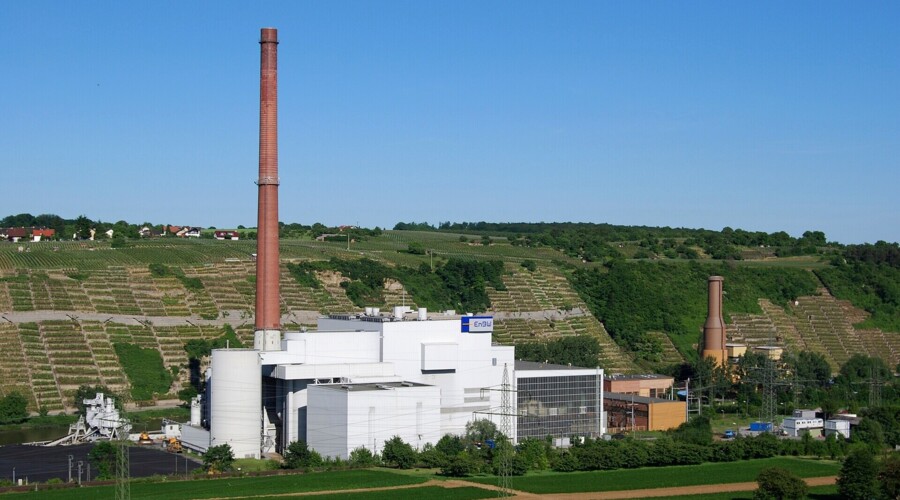
Walheim Power Plant, EnBW, Germany
Peaking power and grid stability since 1982
When the grid needs power, the F-class gas turbine delivers it within less than an hour. When in stands still or slow-roll, the generator stays connected as a synchronous condenser, stabilising frequency and reactive power. When power is requested the generator brakes down to pick up the gas turbine from turning speed, the HS clutch engages automatically. The generator pulls up the gas turbine to ignition speed (negative torque) and then the gas turbine speeds up the generator to grid speed (positive torque). HS-88 clutch makes all these modes possible with only one additional bearing – engaging and disengaging almost daily, depending on grid demand. The plant has run this way since 1982.
- Product: HS-88
- Power: 170 MW at 3,000 rpm
- In operation since: 1982 (re-powering 2013)
- Mode: peaking power, gas turbine start-up and synchronous condensing
- Feature: Compact Clutch with only one support bearing
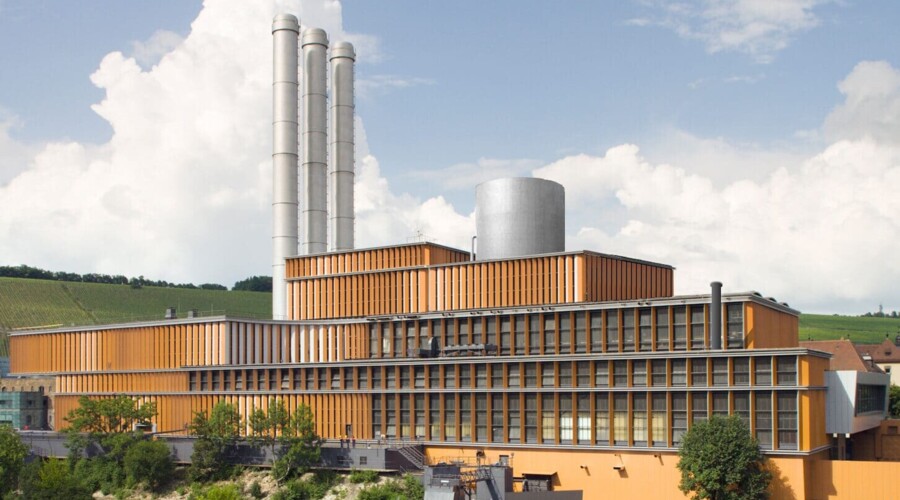
Würzburg CHP Plant, WVV, Germany
Earns money in summer, heat in winter
In summer, the generator earns money as a synchronous condenser while the turbine stands still. In winter, the full train runs at base load and feeds the district heating network. The MS-57 combines gearbox and clutch in a single inline package, with no extra bearings – one of Germany's most modern combined heat and power, and grid stability systems.
- Product: MS-57
- Power: 22 MW at 1,500 rpm
- In operation since: 2020
- Mode: combined heat and power, synchronous condensing
- Feature: gearbox-integrated, with thrust collar for generator positioning
Downloads
- RENK - Synchro self shifting clutches (2.5 MB)
E-Mail angeben
Bitte geben Sie Ihre E-Mail-Adresse an, um den Download zu starten.
- RENK - Couplings (3.3 MB)
E-Mail angeben
Bitte geben Sie Ihre E-Mail-Adresse an, um den Download zu starten.
Get in touch with our experts in case of any questions: