Unmanned Ground Vehicle
Unmanned mobility starts with the drivetrain
The battlefield is changing. Persistent surveillance, autonomous systems, and long-range precision effects are transforming how military forces operate. In contested environments, sending soldiers into the first line of contact is becoming increasingly difficult. Unmanned systems are taking on a growing share of combat, support, and reconnaissance missions.
This evolution requires more than autonomous software and advanced sensors. It requires mobility systems that are designed from the ground up for remote and autonomous operation.
Built on the Patria TRACKX platform and equipped with RENK's digitalized HSWL 076 transmission Transmission The function of a vehicle transmission is to adjust the torque and speed, and to transfer engine power to the drive wheels. , the concept demonstrates how certified drive-by-wire technology can enable a new generation of tracked vehicles Tracked vehicles A tracked vehicle is a vehicle that moves on tracks rather than wheels, typically used for rough terrain. designed for remote operation and future autonomous functionality. The collaboration showcases a potential approach to combining mobility, payload capacity, and digital vehicle control in support of evolving operational requirements.
The result is more than an unmanned vehicle concept. It demonstrates how digitalized drivetrain technology can provide the foundation for remote operation and future autonomous functionality across a wide range of tracked vehicle applications.
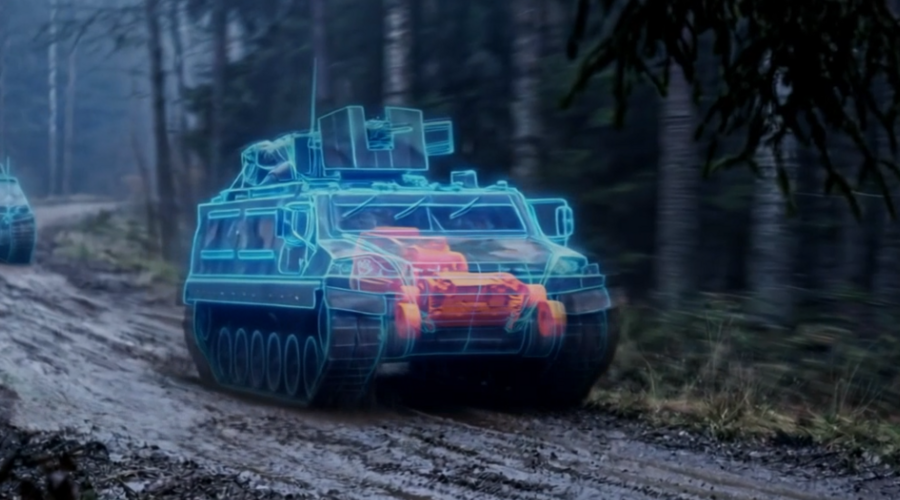
Drive-by-wire architecture: foundation for remote operation and beyond
Before autonomy becomes possible, every unmanned ground vehicle must solve one fundamental challenge. The vehicle must be able to accelerate, steer, and brake without a crew member operating it physically.
This capability starts in the drivetrain.
RENK's HSWL 076 integrates propulsion, steering, and braking into a single digitally controlled subsystem. Through its drive-by-wire architecture, mechanical control interfaces are replaced by redundant electronic actuation systems, creating the foundation for remote operation, advanced driver assistance functions, platooning, loyal wingman concepts, and future autonomous missions.
Unlike experimental solutions, the HSWL 076 is based on a safety architecture developed for operational deployment. The system incorporates redundant actuators, fail-operational functionality, cybersecurity provisions, and compliance with internationally recognized safety standards. The result is a drivetrain that remains controllable even under fault conditions, ensuring mission continuity when reliability matters most.
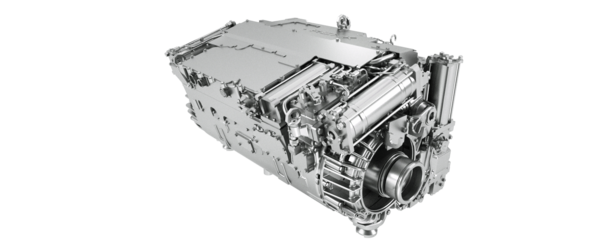
HSWL 076
UGV concept unites TRACKX-platform with RENK drivetrain
The joint concept developed by RENK and Patria brings together Patria's modular TRACKX platform approach and RENK's digitalized drivetrain technology.
Designed as a heavy unmanned ground vehicle concept, the demonstrator illustrates how payload capacity, tracked mobility, and remote operation capability can be combined within a single platform architecture. Its modular design is intended to support a broad range of potential mission profiles, from logistics and engineering support to reconnaissance, casualty evacuation, and combat support applications.
By showcasing these capabilities in one concept vehicle, RENK and Patria demonstrate a possible pathway toward greater operational flexibility and reduced crew exposure in future land systems.
Extending reach. Protecting personnel. Increasing capability.
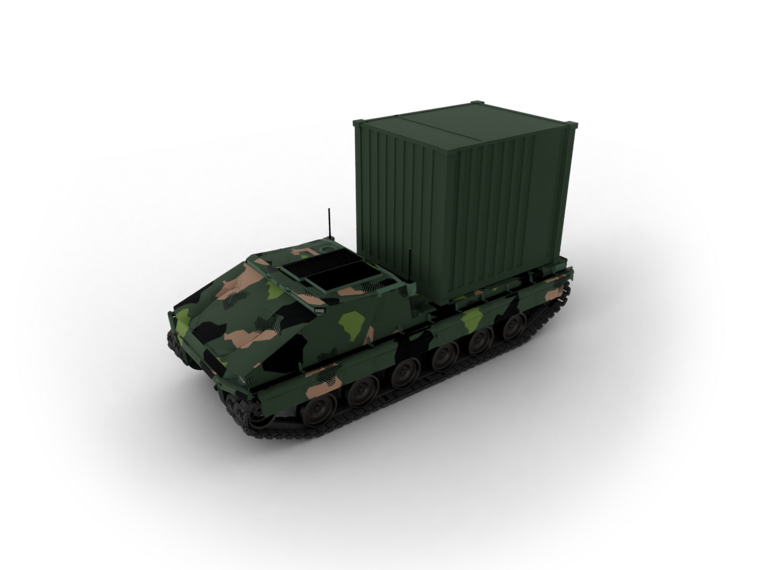
As military operations evolve, armed forces are seeking new ways to extend combat power while reducing risk to personnel. Heavy unmanned ground vehicles combine the mobility and endurance of tracked combat vehicles with remote operation capabilities, enabling critical missions in environments where human presence may be tactically undesirable or operationally impossible.
Their ability to carry substantial payloads and operate alongside mechanized formations makes them a versatile force multiplier. From logistics and engineering support to reconnaissance, casualty evacuation, and combat support missions, a single modular platform can fulfill a wide range of operational requirements.
As unmanned and optionally manned systems become an increasingly important part of future force structures, heavy UGVs will play a key role in enhancing operational flexibility, protecting personnel, and maintaining freedom of action on the modern battlefield.
Enabling the next generation of military mobility
RENK has spent more than 150 years developing mobility solutions for the world's most demanding military platforms.
Today, that expertise is enabling the next evolution of land warfare.
As armed forces introduce unmanned and optionally manned systems into future force structures, RENK provides the critical mobility technologies required to make those concepts operational. Our drive-by-wire architecture forms the foundation for remote operation, advanced automation, and future autonomous functionality across a wide range of tracked vehicle programs.
The cooperation with Patria demonstrates what is possible today. The technology behind it is designed to support the military vehicle programs of tomorrow.
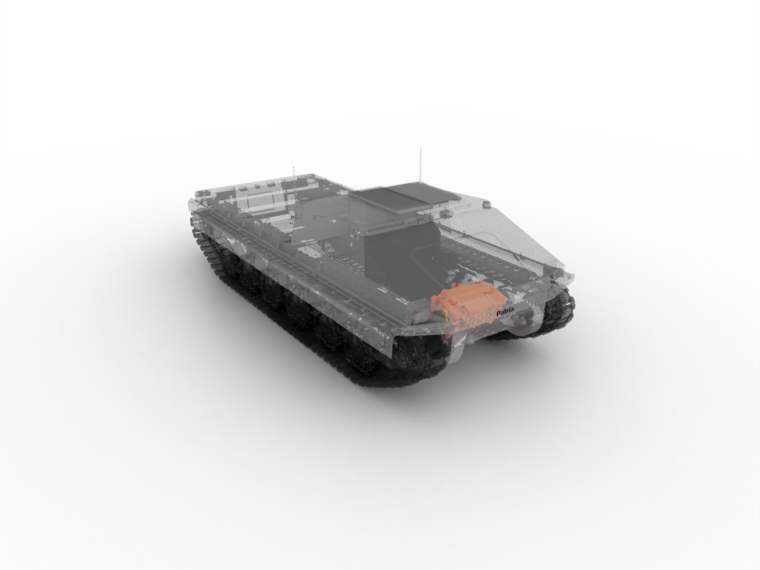
Ready for the next generation of military mobility?